By Lorenzo Dell’Aquila
Dir. Archaeological Area Vicus Caprarius
Translated from the original Italian.
The castellum aquae—the distribution tank of the Virgin Aqueduct uncovered during the excavations at Vicus Caprarius—provides remarkable evidence of the advanced technological expertise achieved by Roman engineers in the construction of hydraulic infrastructures.
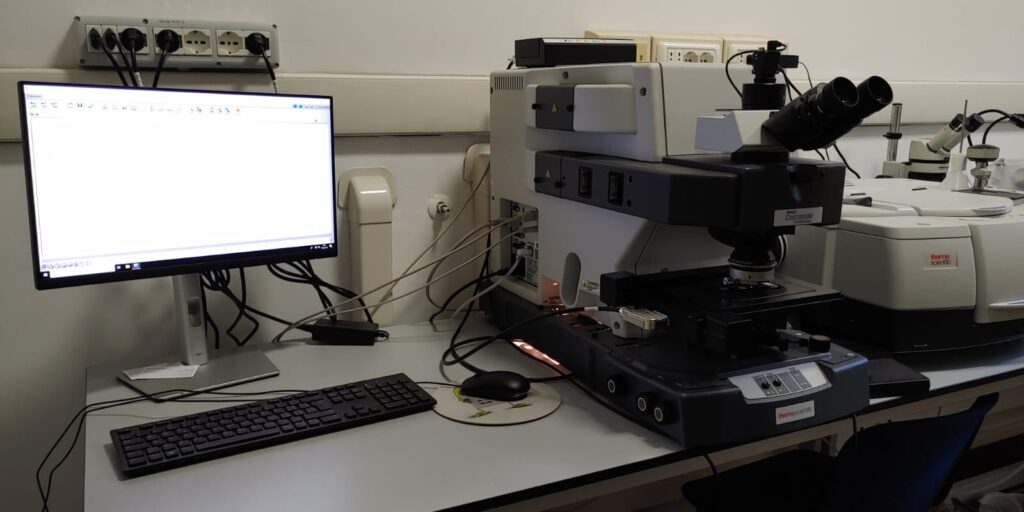
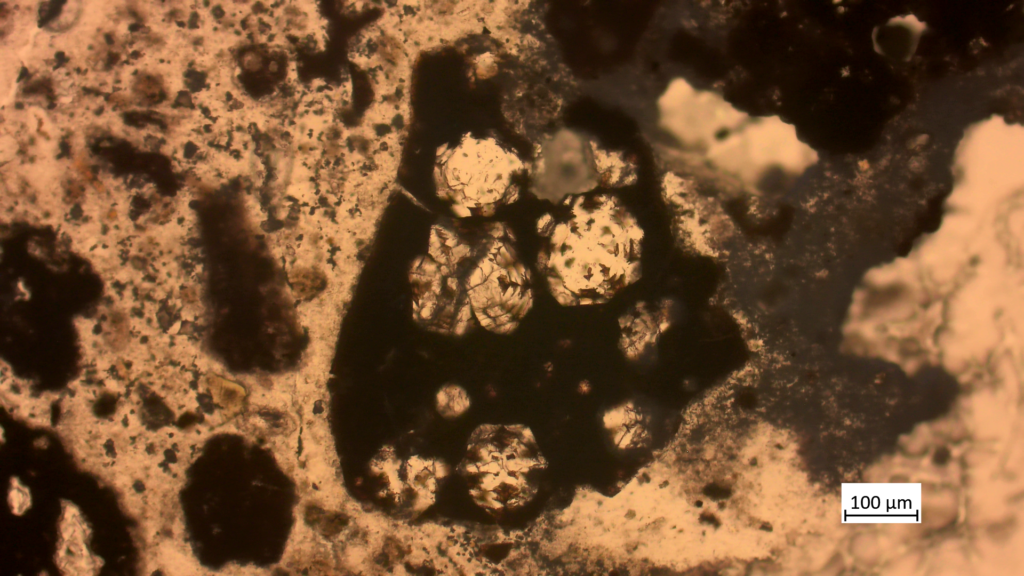
As part of the museum’s ongoing research activities carried out in collaboration with the GeomLab Laboratory of Sapienza University of Rome, archaeometric analyses of the structure’s hydraulic coating have made it possible to reconstruct the composition of the mortar and better understand its properties, confirming the use of one of the most sophisticated construction technologies of the Roman world.
Petrographic and mineralogical investigations confirmed the use of a high-quality hydraulic mortar capable of waterproofing surfaces, protecting masonry and ensuring the long-term durability of the structure for more than two millennia.
To investigate the characteristics of this coating in greater detail, two mortar samples were analysed: one taken from the portion of the structure that has remained permanently submerged in water and another from an area that has remained dry. Microscopic and mineralogical analyses made it possible to reconstruct the composition of the mortar, assess the quality of its manufacture and understand the processes responsible for its exceptional state of preservation.
The results show that both samples were produced according to established Roman construction technology, based on the use of lime and pozzolana, the volcanic ash characteristic of the Lazio region. The mortar also contains fragments of red pozzolana, crushed ceramic material, volcanic rocks and minerals such as quartz, pyroxenes and leucite, all of which were readily available in the surrounding area.
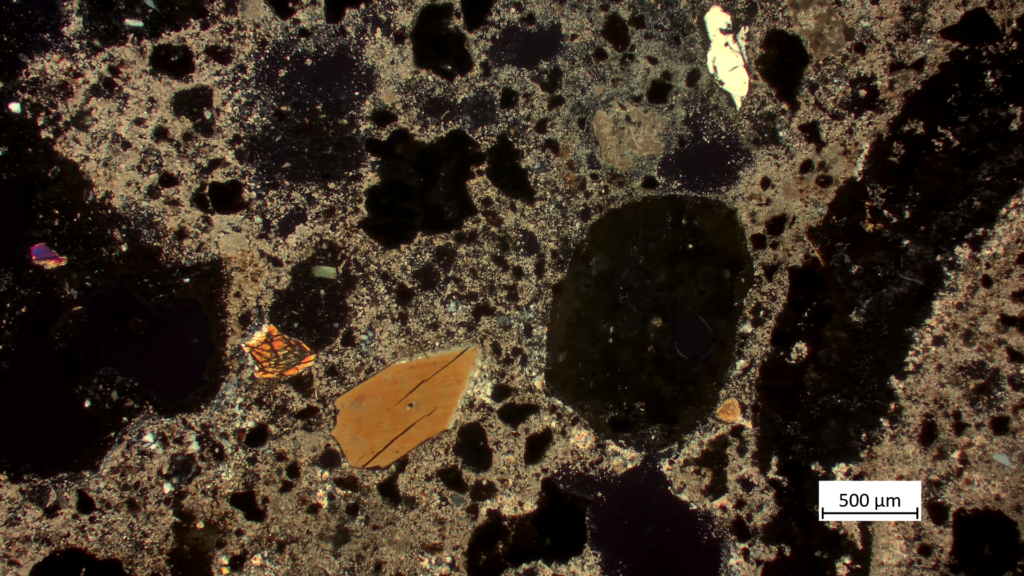
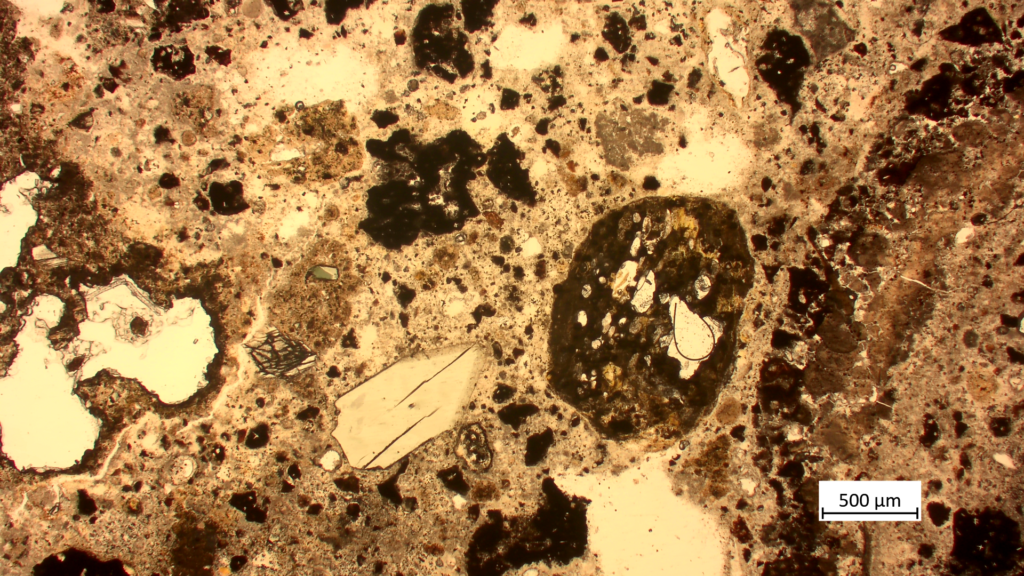
The binder-to-aggregate ratio, approximately 1:3, also provides valuable information. The binder, consisting of lime, is the component that holds the mixture together, while the aggregates include pozzolana and the mineral materials that give the mortar its structure. This proportion proved to be particularly well balanced, indicating careful preparation of the mortar. The homogeneous distribution of its components and the limited presence of microstructural defects further confirm the high level of workmanship achieved by Roman craftsmen.
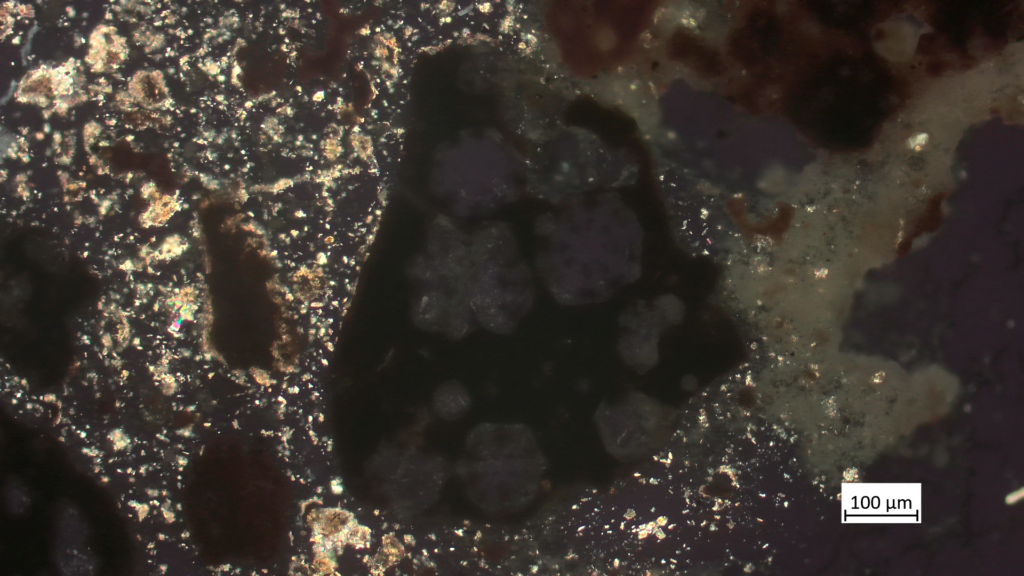
The sample taken from the submerged portion of the structure contains a higher amount of amorphous hydraulic phases, namely compounds without an ordered crystalline structure that form during the reaction between lime and pozzolana. These phases are responsible for the hydraulic properties of the mortar, enabling it to harden and retain its mechanical strength even in continuous contact with water. Their presence played a fundamental role in the remarkable durability of the coating over the centuries.
This research adds a further piece to our understanding of the archaeological heritage preserved at Vicus Caprarius and contributes to a deeper appreciation of the site’s role within the urban history of ancient Rome. Projects such as this highlight how the value of an archaeological site is continually enriched through scientific research, ongoing investigation and the dissemination of knowledge, complementing its role as a place open to the public.